



Infinite Banking, Part 1: Where the Concept Came From and What It Is


By Titan Brokerage • November 18, 2026

Navy bank building encircled by curved arrows, with a small stack of coins beside it, symbolizing financial circulation.

If you sell permanent life insurance, you have almost certainly had a client, or a client's brother-in-law, ask you about "infinite banking." Reactions in our industry tend to split. Some agents have built entire practices around it. Others roll their eyes at the term. We work with both camps, and we think the most useful thing we can do is start at the beginning: where the idea came from, what it actually is, and what it is not.


This is the first post in a series on the Infinite Banking Concept, or IBC. In the coming weeks we will cover policy design, whole life versus indexed universal life, early cash value versus long-term accumulation, using policy loans to deal with debt, and how to present all of it honestly. Today is the foundation.

The Idea in Plain English

IBC starts with a simple observation; almost everyone finances something. Cars, equipment, education, home projects, even vacations. Interest flows out to banks and finance companies, and most households never capture any of it. IBC proposes treating financing as a function you can bring in-house, by building a pool of capital you control and borrowing from it instead of from an outside lender.


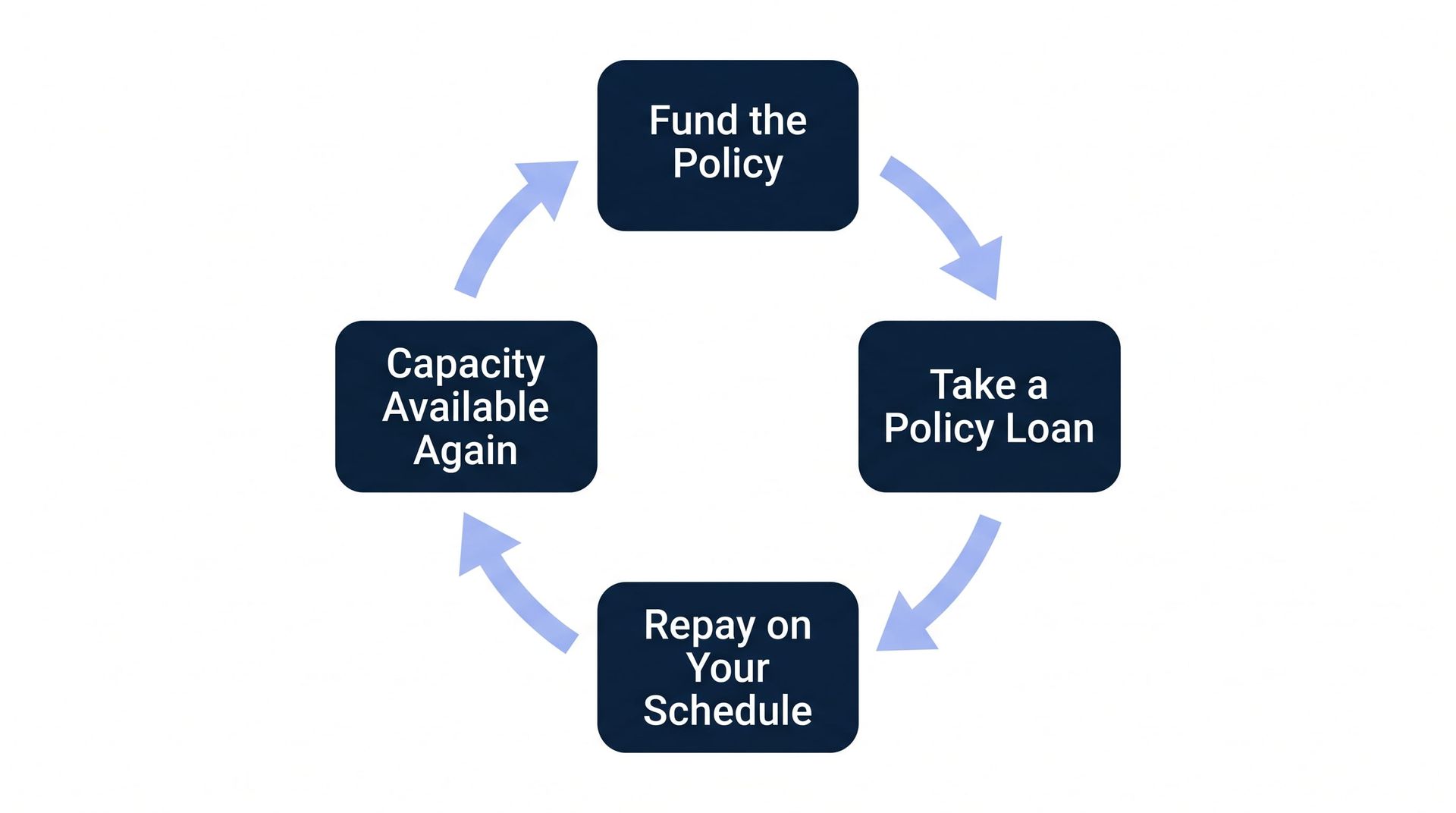
The usual vehicle is a dividend-paying whole life insurance policy designed to build cash value quickly. The policyholder funds it over time. When they need money for a purchase, they take a policy loan from the carrier, using the cash value as collateral, rather than withdrawing their own money. They then repay the loan on a schedule they set. Depending on the carrier's loan provisions, the cash value may continue to earn dividends while the loan is outstanding. Once the loan is repaid, the capacity is available again. That cycle is what Nelson Nash called becoming your own banker.

Who Was Nelson Nash?

Timeline showing concept formed in the early 1980s, seminars in the 1980s–1990s, and a book published in 2000.

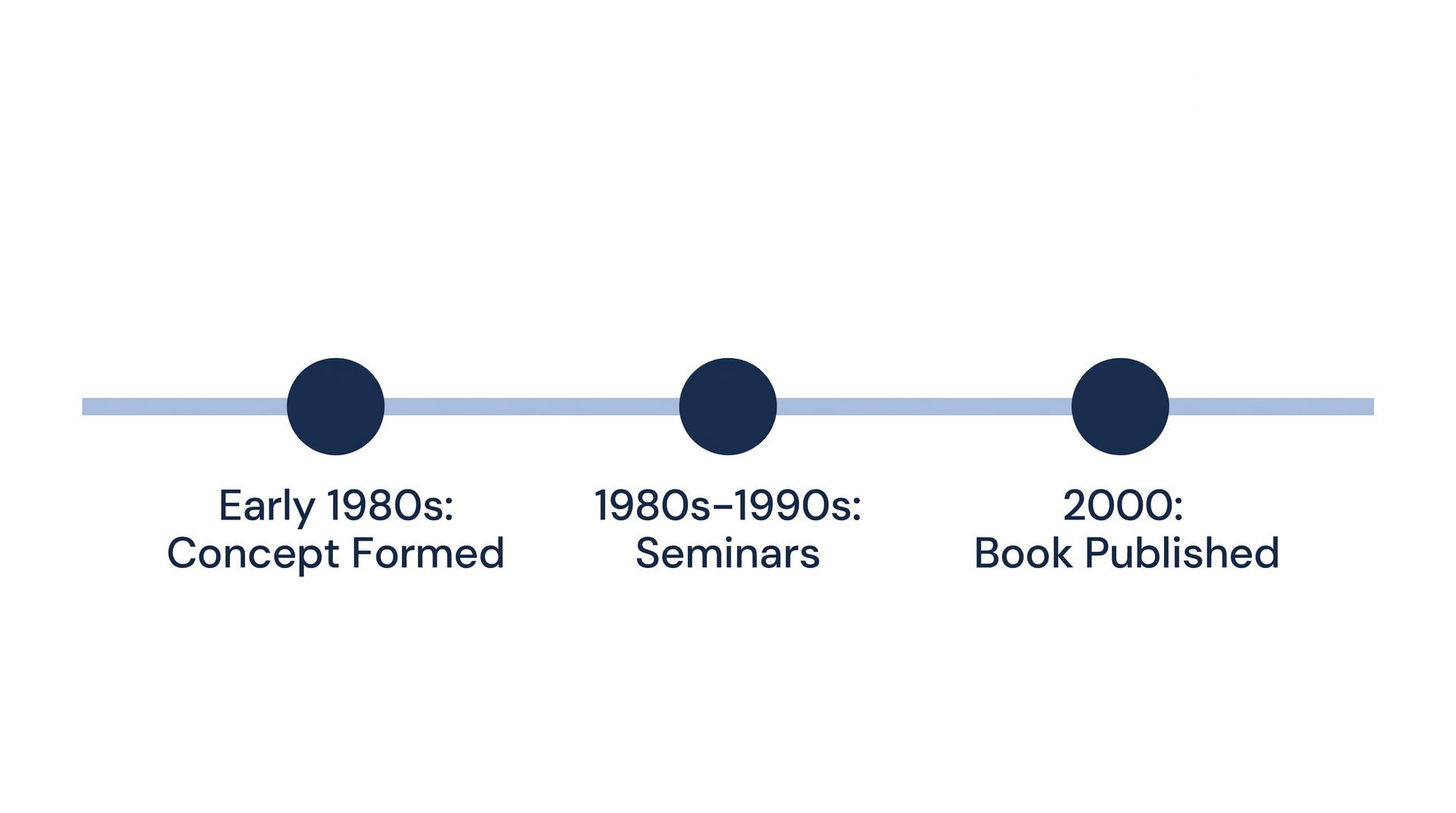
The concept's originator was R. Nelson Nash (1931–2019), a life insurance agent whose career spanned more than three decades. By most accounts, he formulated the idea in the early 1980's, a period when bank loan interest rates were painfully high. He was carrying debt and looking for a way out that did not mean sending more interest to a bank, and he turned to the loan provisions of the whole life policies he already owned. What began as a personal solution became, over time, a framework.


Nash spent the following years refining and teaching it, giving seminars through the late 1980's and 1990's. In 2000 he self-published a short book, Becoming Your Own Banker: Unlock the Infinite Banking Concept, which he later updated in additional editions. The book spread largely by word of mouth. An educational organization grew up around it, now called the Nelson Nash Institute and formerly the Infinite Banking Institute, along with a practitioner program for agents trained in the method.


Nash's described financing as a function every household performs; you either pay a bank to perform it for you, or you perform it yourself.

The Mechanics Are Older Than the Concept

The tools Nash relied on to implement his concept in the early 1980's predates this period by well over a century. Mutual life insurers have paid dividends on whole life policies and offered policy loans against cash value since the 1860's. What Nash contributed was a way of thinking about those features; to treat the policy as a capital base, to treat loans as a financing source and repay them with the discipline you would owe a bank.

How an IBC-Style Policy Typically Works

We will go deeper on design in Part 2, but a few features define the approach.


  • A base whole life policy paired with paid-up additions, so that a large share of each premium goes toward cash value rather than death benefit.


  • A design kept within the limits that prevent the policy from becoming a modified endowment contract, because MEC status changes how loans and withdrawals are taxed.


  • Cash value that is usually lower than total premiums paid in the early years and builds over time, with the pace varying by carrier and design.


  • Loans made from the carrier's general account with the cash value as collateral. Interest is charged, and any unpaid balance reduces the death benefit.


  • Dividends that are declared by the carrier each year and are not guaranteed.

Why It Resonates with Clients

Control. Clients like deciding when and how much to borrow and how to repay, without a loan committee or a fixed amortization schedule.


Liquidity. Policy loans generally do not require a credit application or a purpose, which appeals to business owners and others with irregular income.


Discipline. Funding a policy is a form of saving that happens on a schedule, and many clients find that structure useful. Add a death benefit and guaranteed elements, and the appeal for conservative savers is easy to see.

What You Need to Be Honest About

IBC attracts passionate supporters and equally passionate critics, and the criticism is not all unfair. If you present this concept, your credibility depends on addressing these points before the client raises them.


It is a long-term commitment. Early cash value is limited in some cases, and a client who needs full access to funds quickly may be disappointed.


Loan interest is a real cost. The phrase "paying interest to yourself" is catchy but imprecise. Interest on a policy loan goes to the carrier, and whether the arrangement works out well depends on loan rates, dividends, and how the carrier credits cash value on borrowed funds. Ask each carrier how its loan provisions work.


Dividends are not guaranteed. Illustrations are projections, not promises, and a client who builds a plan around the current dividend scale is taking a risk they should understand.


Tax and lapse risk are real. Policy loans are generally not taxed as income while the policy remains in force and is not a MEC, but letting a policy lapse or surrendering it with an outstanding loan can create a taxable gain. Clients should coordinate with a tax professional.


Opportunity cost matters. Whole life is a conservative asset with its own costs. For some clients, money placed in a policy is money not available for other goals, and the comparison should be made openly.


Marketing can outrun the facts. Claims that IBC is risk-free, always tax-free, or a guaranteed way to beat a bank invite scrutiny, and rightly so. Describe the strategy accurately and let the numbers make the case.

Where You Come In

A man in a navy suit reviews papers at a desk beside a bright office window.

Whether IBC suits a given client is a suitability question, not a philosophy question. Your job is to evaluate whether the client has the cash flow to fund a policy for the long term, whether their goals align with what the strategy can deliver, and whether the design and carrier fit. On that last point, dividend history, financial strength, and loan provisions matter, which connects directly to our recent discussion of how to evaluate who stands behind a carrier. Document your reasoning and bring the client's CPA into the conversation when taxes are involved.

Coming Up Next

In Part 2, we will walk through how an IBC-style policy is actually designed: base premium, paid-up additions, riders, and the MEC line. If you have a case where a client is asking about infinite banking, or you want help comparing how different carriers' whole life policies perform under an IBC design, send it over and We will run the comparison with you.

This article is for educational purposes for licensed professionals and is not tax, legal, investment, or financial advice. Policy loans reduce cash value and death benefit and may result in policy lapse or taxable income if not managed properly. Dividends are not guaranteed. Verify product features, state rules, and tax treatment before making recommendations.

Frequently Asked Questions

  • What is the Infinite Banking Concept?

    The Infinite Banking Concept (IBC) is a strategy that uses a dividend-paying whole life policy as a personal source of financing. The policyholder borrows against the cash value instead of from an outside lender, then repays on their own schedule. Once the loan is repaid, the borrowing capacity is available again.

  • Who created infinite banking?

    R. Nelson Nash, a life insurance agent, developed the concept in the early 1980s, when bank loan rates were high. He outlined it in his self-published 2000 book, Becoming Your Own Banker.

  • Do you really pay interest to yourself with infinite banking?

    Not exactly. Interest on a policy loan is paid to the carrier, not to the policyholder. Whether the arrangement works out well depends on loan rates, dividends, and how the carrier credits cash value on borrowed funds.

  • Are policy loans taxable?

    Policy loans are generally not taxed as income while the policy stays in force and is not a modified endowment contract. If the policy lapses or is surrendered with a loan outstanding, it can create a taxable gain. Clients should coordinate with a tax professional.

  • Is infinite banking right for every client?

    No. IBC requires a long-term commitment, steady cash flow to fund the policy, and acceptance that dividends are not guaranteed. Whether it fits is a suitability question that depends on the client's goals, finances, and the policy design.

Your Growth Starts with the Right Partner

Get the support, expertise, and carrier access to grow your business with confidence.


Insights to fuel your marketing business

Get market updates, product insights, and advisor resources delivered to your inbox.

Contact Us

SHARE THIS

Latest Posts

Dark blue percentage symbol in circular arrows beside a light gray rising line chart.
By Titan Brokerage • November 12, 2026
Annuity rate resets explained for advisors: how crediting rates move, replacement risks, a step-by-step checklist, and what to say to clients.

Two women reviewing documents in a bright office, with a printer, binders, and desk supplies nearby.
By Titan Brokerage • November 5, 2026
PE ownership, private credit, and offshore reinsurance are reshaping annuity carriers. Get a due diligence checklist and client talking points.

Two men in a meeting, one smiling and pointing at documents across a desk.
By Titan Brokerage • October 29, 2026
Discover why more pre-retirees prioritize guaranteed income over market growth and how advisors can use SPIAs and income riders to build a retirement floor.

Older man in a gray blazer reviewing documents during a meeting with two people in an office
By Titan Brokerage • October 23, 2026
Discover how life settlements provide older clients a valuable alternative to lapsing a policy, offering meaningful liquidity for long-term care and retirement.

Three people in a meeting reviewing documents at a table in a bright office
By Titan Brokerage • October 15, 2026
Learn how to guide your clients through modern long-term care options, including 7702B riders, 101(g) riders, hybrid contracts, and stand-alone policies.

September 30, 2026
Learn how to address client concerns about annuity surrender charges and market value adjustments with clear explanations and liquidity-focused conversations.

Smiling man in a suit discussing documents across a desk in a bright office
By Titan Brokerage • September 23, 2026
Learn how to secure better offers on impaired-risk life insurance cases through informal submissions, case highlighting, and carrier niche matching.

Two people in a business meeting, one speaking while seated across a table in a bright office.
By Titan Brokerage • September 16, 2026
Discover why routine life insurance policy reviews are a crucial habit for financial advisors. Learn how proactive reviews build trust and uncover new opportunities.
Two small wooden cubes on a white table, one natural with “CD” and one blue with “MYGA” in a blurred office setting
By Titan Brokerage • September 9, 2026
Compare MYGAs and Bank CDs. Learn the key differences in tax-deferred growth, early withdrawal options, and estate planning for your savings.

Snowy city skyline at dusk with illuminated highway and modern high-rise towers.
July 10, 2026
Learn how Titan Brokerage Services helps financial advisors grow with personalized support, strategic partnerships, and solutions designed for long-term success.